Thermal insulation is a crucial component in the design of sustainable buildings, with significant impacts on both energy savings and reduced CO2 emissions. In fact, according to the ENEA, a well-insulated building can reduce energy consumption for heating and cooling by up to 30 percent. This translates into significant economic savings for companies and a smaller carbon footprint.
Cork, with its unique thermal and acoustic insulation properties, is one of the most effective and sustainable solutions for companies in the building industry. It is a 100% renewable material, derived from the bark of the cork oak tree, which can be harvested every 9-10 years without damaging the tree. This makes it an environmentally friendly choice for companies concerned about the environmental impact of their operations. Structurally, cork is resistant to moisture, fire and weathering, with durability that makes it suitable for long-term civil and industrial projects. Companies that use cork for thermal insulation can benefit not only from increased energy efficiency, but also from a sustainable investment over time, reducing maintenance-related expenses.
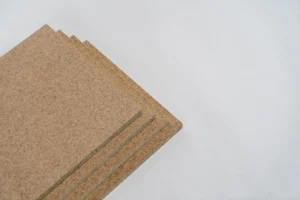 Why choose cork for thermal insulation?
Cork is one of the most versatile and sustainable natural materials used for thermal insulation. In addition to being a renewable resource, it has excellent thermal as well as acoustic insulation properties. This material offers several advantages that make it ideal for sustainable building projects.
Natural properties of cork
Cork has a unique cellular structure composed of millions of tiny air-filled cells that give it excellent insulation capabilities. Because of this structure, cork can effectively reduce heat transfer, keeping the temperature inside buildings more stable. This insulating ability is especially useful in buildings that require both protection from winter cold and summer heat.
Environmental Sustainability
Cork is an environmentally friendly material par excellence. Its production has minimal environmental impact, because as we mentioned earlier, the bark is harvested without cutting down the tree, which can regenerate and continue to grow for decades. In addition, cork is 100% biodegradable and recyclable, which means it can be reintroduced into the production cycle at the end of its use. This makes it an especially attractive choice for companies wishing to reduce their carbon footprint.
Versatility of use
Cork is not only an excellent thermal insulator, but also offers superior acoustic properties, making it perfect for buildings that also require noise insulation. It is widely used in a variety of sectors, from residential and commercial construction to industry. Its moisture, insect and fire resistant properties make it suitable for walls as well as floors, roofs and crawl spaces.
The role of thickness in the effectiveness of thermal insulation
When it comes to thermal insulation, the thickness of the material used is one of the most important variables. Cork, due to its unique structure and natural properties, offers excellent insulation performance, but its effectiveness also depends on the thickness of the board or granules used.
Design variables
Choosing the optimal thickness depends on various factors, including the building design and climate zone. In general, to achieve good thermal insulation with cork, it is advisable not to go below 4 to 5 cm. However, for buildings located in areas with harsher climates, greater thicknesses, such as 10 or 20 cm, can be used to increase overall energy efficiency. For example, the use of cork panels with a thickness of 18 cm can ensure compliance with the energy requirements set by Italian regulations, such as Legislative Decree 63/2013, which regulates the energy efficiency of buildings.
Influence of climate zone
In areas with extremely cold or hot climates, insulation must be calibrated to avoid heat loss during winter and to maintain a comfortable indoor temperature in summer. Cork also excels in summer insulation because of its high thermal phase shift (the time it takes heat to pass through a material). This makes it ideal for keeping homes cool even during hot days.
Practical application: the double layer
The double-layer approach, also known as alternating-layer or “crisscross” insulation, makes it possible to minimize heat loss from weak points, such as the joints between panels. In a thermal insulation system, the joints are in fact the critical points from which heat can pass most easily, causing a decrease in overall effectiveness.
Advantages of the double-layer method
- Better sealing: crossing joints provides more uniform coverage, reducing possible escape routes for heat. This is especially useful in projects where continuity of insulation is essential, such as in renovations or buildings with many uneven surfaces.
- Reduction of thermal bridges: thermal bridges are areas where insulation is less effective, often due to broken continuity in the insulation material. The use of double-layer panels virtually eliminates these bridges, maintaining even heat distribution and ensuring that every area of the building envelope is well insulated.
- Improved energy efficiency: by using overlapping panels with fractionated thickness, the insulating properties of cork can be optimized. This system allows for better control of thermal transmittance (i.e., the material’s ability to transmit heat), reducing energy costs for heating and cooling because indoor temperatures stabilize more easily.
- Ease of installation: cork, being a light and flexible material, facilitates the installation of overlapping panels. Although the double-layer system requires extra care during installation to avoid, precisely, overlapping joints, it can be done without special equipment, making it a practical solution even for small- to medium-sized construction sites.
This approach, as we said, is particularly suitable for renovations or projects that aim to achieve high energy certifications, since the reduction of thermal bridges and increased insulation uniformity contribute directly to increasing the building’s overall energy efficiency.
What thickness to ultimately choose? Practical guide for companies and designers 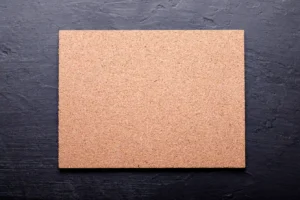
The choice of cork thickness for thermal insulation is a key decision that can directly affect a building’s energy efficiency and operating costs.
However, there are no set thicknesses; rather, it is important to evaluate according to the situation and design. The main factors to consider in selecting the right thickness then, could be summarized as follows, optimizing for different industrial, civil and sustainable applications.
Choice of thickness according to application
The specific application of cork affects the choice of thickness. For each type of operation, the optimal thickness may vary, as factors such as climate zone, building structure, and thermal and acoustic insulation requirements must be taken into account.
- Exterior walls: for exterior walls, especially in cold climates, a thickness between 10 and 20 cm is considered ideal for maximizing thermal insulation. An example may be the use of compressed blond cork panels with thicknesses up to 20 cm, which also offer excellent moisture resistance and breathability.
- Roofs and roofing: for roofs and roofs, where heat loss is particularly high, thicknesses of 12-18 cm are recommended, especially for flat or mansard roofs. In this context, cork can be used in combination with other materials to achieve more efficient insulation.
- Floors: for floors, on the other hand, a thickness of1 to 3 cm is often sufficient to improve thermal and acoustic insulation, especially in buildings that also require protection from footfall noise or vibration. Granular cork is an excellent solution for subfloors.
Comparison with other insulation materials
When comparing cork with other insulation materials, such as rock wool or expanded polystyrene (EPS), it is clear that cork offers a combination of thermal, acoustic, and sustainable performance. However, to achieve performance comparable to these materials, a slightly greater thickness is generally required.
- Cork vs expanded polystyrene (EPS): cork requires slightly more thickness than polystyrene to achieve the same thermal transmittance, but offers better sound insulation and greater breathability. For example, to achieve similar performance to 12 cm of EPS, 14-16 cm of cork may be required. However, cork has the advantage of being a natural and biodegradable material.
- Cork vs rock wool: compared to rock wool, cork offers comparable acoustic and thermal performance, but is superior in terms of durability and moisture resistance. To achieve good insulation with rock wool, thicknesses between 10 and 15 cm are used, while thicknesses of 12-18 cm may be needed with cork.
Thickness-performance ratio
1. Available space and architectural constraints
When designing thermal insulation in settings where interior space is limited, such as in historic buildings or renovations, the thickness of cork must be chosen carefully. In these cases, every inch counts, and the goal is to achieve the best possible insulation without sacrificing living space. Cork, because of its insulating efficiency per unit thickness, is ideal for these situations. For example, by using small thicknesses, such as 4-6 cm, thermal and acoustic performance can be improved without compromising the original architecture of the building. In historic restorations, the use of cork is particularly popular because it can be installed without significantly altering the exterior or interior aesthetics of the structure.
2. Insulation for light construction
In lightweight structures such as prefabs, modular houses or wooden buildings, the weight of the insulation material can have a significant impact on the structure. Cork, being a lightweight and flexible material, integrates perfectly with these constructions, minimizing the structural load. With thicknesses ranging from 4 to 8 cm, cork provides effective thermal insulation without adding excessive weight to the structure. This is particularly attractive for light residential construction, where the strength of the structure is crucial and the addition of heavier materials may require expensive reinforcements.
3. Durability and maintenance
Cork, unlike many synthetic materials, retains its insulating properties for a long time, even in harsh environmental conditions. However, in particularly demanding situations, such as extremely humid environments or those exposed to freeze-thaw cycles, opting for greater thicknesses can increase the durability of insulation. Thicknesses of 12 cm or more offer greater resistance against wear and tear caused by moisture, preventing infiltration and keeping insulation performance intact over time. In addition, in wet environments, thicker insulation can reduce maintenance costs because it decreases the need for work to repair or replace damaged materials.
 Local regulations and tax incentives: the role of cork thickness
The choice of insulation thickness is not only a technical or economic issue: it is also strongly influenced by local regulations and tax incentive opportunities. In several countries, energy efficiency laws set specific requirements for thermal insulation in buildings, and these often translate into a minimum mandatory thickness in order to qualify for incentives or energy certification.
For example, in Italy, Legislative Decree 63/2013 and the subsequent Ecobonus define minimum thicknesses to obtain tax benefits related to energy efficiency improvement interventions. To obtain certifications such as LEED o BREEAM, moreover, which attest to the high sustainability and energy efficiency of buildings, it is crucial to meet certain parameters related to thermal insulation.
These certifications not only ensure the reduction of energy consumption, but can also increase real estate value and enhance the environmental reputation of the project. In particular, buildings that aim to achieve the standard NZEB (Near Zero Energy Building) standard, which requires the building to have near zero energy consumption, require significant insulation thickness to minimize energy loss and maximize efficiency.
Recap: tips for optimizing thickness
We have talked about how, when and how much to vary the thickness of cork panels, but we also need to remind ourselves how to optimize them with two simple notes.
- Use double layer: as mentioned earlier, double layer with fractional thickness allows optimizing insulation without excessively increasing the total thickness, improving continuity and reducing thermal bridges.
- Combination with other materials: in projects that require optimal insulation without compromising usable space, cork can be combined with other insulation materials, such as polystyrene or rock wool, to improve thermal performance without increasing the total system thickness too much.
The use of cork as thermal insulation offers a range of long-term benefits, both in terms of energy efficiency and sustainability. However, the choice of thickness is crucial to maximizing these benefits. In addition to energy savings and tax incentives, proper thickness also provides superior durability and reduced maintenance costs over time. For B2B companies, investing in the right thickness of cork means not only improving the thermal performance of buildings, but also adhering to growing market demands for environmentally friendly solutions. Choices related to thickness should not be seen as simply an additional cost, but as an investment that pays off in both economic and environmental terms. Energy certifications and international standards reward the use of materials such as cork, which, thanks to its ability to provide thermal and acoustic insulation, fits perfectly into the context of sustainable building.
In conclusion, every project has different needs, but choosing the right thickness for cork allows you to get the most out of this natural material, ensuring efficient and sustainable buildings that meet the needs of the future.