Living comfort depends not only on furniture or interior design, but also on invisible elements that improve the quality of daily life, such as thermal and acoustic insulation of buildings. Insulation plays a crucial role in maintaining optimal temperatures inside homes, reducing energy consumption and improving overall well-being. With sustainability increasingly at the center of building choices, natural materials such as cork are emerging as innovative and responsible alternatives to traditional synthetic insulation.
Among the various insulation solutions, cork insulation stands out for its extraordinary properties. This material, derived from the bark of the cork oak tree, combines a number of benefits beyond energy efficiency. It is breathable, durable, environmentally friendly and incredibly versatile, making it ideal for both new construction and renovation. Choosing cork insulation not only means improving the energy performance of a building, but also contributing to a more sustainable and environmentally friendly future.
Today, thanks to the evolution of processing technologies, cork is no longer limited to traditional uses such as bottle caps, but has become a major player in the construction industry. Its use for the construction of thermal coats represents an innovative choice that meets the needs of efficiency, aesthetics and sustainability. This article will explore the features, benefits, and practical applications of cork insulation, offering an in-depth analysis of how this material can revolutionize the way we think about insulation.
Cork insulation: what makes it unique
Cork is an extraordinarily versatile material, and its properties make it unique in the field of thermal insulation. Its cellular structure, composed of millions of tiny air chambers, gives the material a combination of lightness, elasticity and insulating capacity that few other natural materials can match. This structure makes cork an excellent conductor of thermal insulation, capable of keeping rooms cool in summer and warm in winter.
Another distinguishing feature of cork is its ability to breathe. Unlike many synthetic materials, cork allows water vapor to pass through, preventing the buildup of condensation and preventing mold and moisture problems. This characteristic makes it particularly suitable for applications in historic buildings or variable climatic contexts, where it is essential to maintain the balance between insulation and breathability.
Ecologically, cork is a renewable resource. The bark of cork oak naturally regenerates every 9-10 years, allowing harvesting without damaging the tree. This process not only ensures sustainable production, but also contributes to the conservation of cork oak forests, which play a key role in reducing CO2 emissions and protecting biodiversity. Using cork for a building’s thermal insulation therefore means not only improving energy efficiency, but also making an ethical choice that supports the environment.
In addition, cork is distinguished by its durability. Unlike many synthetic insulators that tend to deteriorate over time, cork retains its insulating and structural properties for decades, offering a long-term return on investment. This strength makes it particularly suitable for outdoor applications, where it is exposed to the elements, and for indoor environments, where it can help improve air quality due to its anti-allergic and antibacterial properties.
Advantages of thermal cork insulation
Installing cork insulation offers a number of advantages that make it one of the most attractive solutions for insulating buildings. One of the main benefits is its outstanding energy efficiency. Due to its low thermal conductivity, cork can significantly reduce heat loss through walls, helping to maintain a stable temperature inside the building. This results in significant savings in heating and cooling costs while reducing greenhouse gas emissions.
In addition to its thermal properties, cork also offers excellent sound insulation. Its porous structure absorbs sound waves, reducing noise from outside and improving acoustic comfort inside the building. This makes it an ideal choice not only for homes, but also for offices, schools, and other environments where noise control is critical.
Another advantage of cork insulation is its breathability. This feature not only prevents the formation of condensation and mold, but also helps to improve indoor air quality. In an age of increasing focus on health and wellness, cork represents a solution that combines technical efficiency and health benefits.
Finally, cork insulation is extremely versatile and can be used for both indoor and outdoor applications. In the case of newly constructed buildings, external cork insulation not only improves energy efficiency, but also adds an aesthetic touch by allowing for customized finishes. As for renovations, interior cork insulation offers an effective solution for improving insulation without altering the building’s exterior appearance, making it particularly suitable for historic or architecturally constrained buildings.
Interior cork insulation: when to choose it
 Installing interior cork insulation is an increasingly popular solution, especially in settings where structural features or architectural limitations make it difficult or impossible to work on the building’s exterior. This approach is particularly beneficial for historic buildings, where maintaining the original appearance of the facade is a priority. Because of its ability to adapt to interior spaces, cork insulation offers a viable way to improve energy efficiency without compromising the aesthetic or cultural value of the property.
Another scenario in which interior cork insulation is highly recommended involves renovations. In many homes built several decades ago, thermal insulation is almost nonexistent, resulting in high energy consumption and poor habitability during the hottest or coldest months. In these cases, cork is a practical and quick solution to improve living comfort. Cork panels can be installed directly on interior walls, reducing heat loss without the need for complex structural work.
From a practical point of view, installing an interior cork insulation requires specific skills, but the process is relatively simple. After surface preparation, the panels are fixed with environmentally friendly adhesives and completed with a finishing layer, such as plaster or breathable paint. This system not only provides effective insulation but also preserves the breathable characteristics of cork, helping to maintain a healthy, mold-free indoor environment.
One aspect that makes interior cork insulation particularly interesting is its ability to also improve sound insulation. In urban settings or multi-unit buildings, reducing noise from outside or adjacent apartments is a significant benefit. Due to its porous structure, cork is able to absorb sound waves, providing a quieter and more comfortable environment.
Exterior cork insulation: protection and design
When it comes to new construction or more extensive renovations, exterior cork insulation is a solution that combines energy efficiency, structure protection, and aesthetic customization options. This type of insulation is applied directly to the outside of the walls, creating a continuous barrier that protects the building from heat loss and weathering. Its effectiveness is especially noticeable in cold seasons, when it helps keep heat inside, and during the summer, reducing heat input.
One of the main advantages of exterior cork insulation is the protection of wall surfaces. This system not only thermally insulates the building, but also defends it from moisture, weather and temperature changes that can cause cracks or other structural damage over time. In addition, cork is UV-resistant and does not undergo significant changes under prolonged exposure to the sun, keeping its performance and appearance intact.
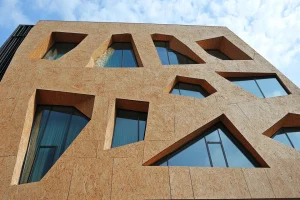
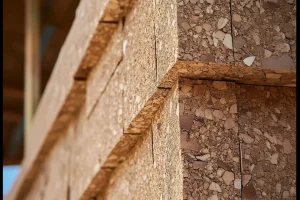
From an aesthetic point of view, exterior cork insulation offers many possibilities for customization. The panels can be clad with different materials, such as colored plasters or stone cladding, to suit any architectural style. This flexibility makes it possible to improve energy efficiency without compromising the building’s exterior; in fact, it often helps to enhance the building’s overall design. For those who want a more natural approach, cork can be left exposed, taking advantage of its unique texture and warm color to create distinctive facades.
Another relevant aspect of exterior cork insulation is its ability to reduce thermal bridges, that is, those areas of the building where more heat loss occurs. Due to the material’s continuity and low thermal conductivity, cork eliminates these critical areas, providing uniform insulation. This not only improves overall energy efficiency, but also helps reduce condensation and mold problems often associated with thermal bridges.
Finally, external cork insulation is also an economically sustainable solution. Although the initial investment may be higher than synthetic materials, the long-term energy savings and greater durability of cork make it an affordable option over time. In addition, many countries have tax incentives or subsidies for those who choose green insulation solutions, making this choice even more affordable.
Comparison of cork and other thermal coat materials
The choice of thermal insulation material is critical to ensure efficient and long-lasting insulation. Cork is distinguished not only by its natural properties but also by its advantages over commonly used synthetic and mineral materials. A detailed comparison highlights why cork is one of the best options for thermal and acoustic insulation.
Compared with expanded polystyrene, cork offers incomparable sustainability. While polystyrene is derived from petroleum and generates a high environmental impact, cork is a renewable and biodegradable resource. In addition, cork’s ability to breathe reduces the risk of moisture accumulation, a frequent problem with synthetic materials that do not allow water vapor to pass through. In terms of durability, cork outperforms polystyrene because it retains its insulating properties even after years of exposure to the elements.
Rock wool, another widely used material, offers good insulation performance but has some limitations compared to cork. Its production requires high energy consumption, making it less sustainable. In addition, rock wool is less resistant to moisture and can degrade over time if not properly protected. Cork, on the other hand, retains its characteristics even in high humidity, offering a more reliable and durable solution.
In contrast, a comparison with wood fiber shows that cork is more versatile and durable. Although both materials are natural and sustainable, cork offers better performance in terms of sound insulation and weather resistance. In addition, cork’s ability to adapt to different applications, both interior and exterior, makes it a more flexible choice for thermal insulation projects.
Economic aspects: is cork insulation really cost-effective?
 The initial cost of cork insulation may seem high compared to other insulation solutions, but it is important to consider the long-term cost-benefit ratio. Cork’s ability to reduce energy consumption translates into significant savings on utility bills, making the initial investment highly cost-effective over time. In addition, its durability and strength reduce the need for maintenance work, offering additional savings.
Another economic factor to consider is the possibility of accessing tax incentives and rebates for energy efficiency work. In many countries, installing cork insulation may qualify for tax deductions or grants that reduce the overall cost of the project. This makes cork not only a sustainable choice, but also an affordable one for a growing number of property owners.
In addition to the economic benefits, cork insulation adds value to the building, improving its energy efficiency and increasing living comfort. These factors are increasingly valued in the housing market, where buyers are looking for sustainable and high-performance solutions. Investing in cork insulation not only means saving money, but also increasing the value of your property.
The future of insulation with cork
With increasing environmental awareness and energy efficiency regulations, the future of building insulation seems to be closely linked to sustainable materials such as cork. Technological innovations are expanding the applications of this material, making it even more high-performance and versatile. For example, the combination of cork with other natural materials and the development of preassembled panels are simplifying installation, reducing application time and costs.
Another area of development involves the integration of cork in construction passive projects, where energy efficiency is maximized through the use of natural materials and innovative technologies. Cork, with its thermal and acoustic insulation capacity, fits perfectly into this context, becoming a key pillar for the buildings of the future.
The global sustainable building market continues to grow, and cork is gaining prominence due to its countless benefits. With its combination of technical performance, environmental sustainability and economic benefits, cork insulation represents one of the most promising solutions for responsible, future-oriented architecture.
Insulation that makes a difference
Choosing cork insulation means investing in a sustainable future, improving living comfort and reducing environmental impact. This natural and versatile material is a concrete answer to the needs of modern construction, combining energy efficiency, aesthetics and environmental friendliness. It is a choice that not only insulates walls, but helps build a better world. Evaluate cork insulation for your projecttoday and discover the benefits of sustainable architecture.