 The cork granule used for filling is produced through a process of crushing and sorting cork bark. This process yields uniformly sized granules that are available in various particle sizes to meet specific needs. For example, finer granules are
 European regulations and impacts on microplastics
EU Regulation 2023/2055 represents a crucial breakthrough in the fight against microplastic pollution. This legislation, the result of extensive studies conducted by the European Chemicals Agency (ECHA), introduces restrictions on the use of microplastics intentionally added to various products. Among the categories most affected by the new regulations are artificial sports surfaces, such as synthetic turf fields, which traditionally use polymeric infill materials to ensure optimal performance.
The implications of this legislation are significant. Each year, an estimated 42,000 tons of intentionally added microplastics are released into the environment in the European Union, a large portion of which comes from the very infill materials used in sports fields. This type of pollution has devastating effects on the ecosystem, as microplastics, which are resistant to degradation, accumulate in soil, water and even the food chain, putting biodiversity and human health at risk.
The eight-year transition period provided by the legislation gives the sports industry an opportunity to adapt and adopt alternative materials. It is in this context that cork for filling emerges as an ideal solution. As an all-natural and biodegradable material, cork eliminates the problem of microplastics at the root, offering a concrete and sustainable response to new regulatory requirements. In addition, because of its versatility, cork can be used in a wide range of sporting and non-sporting applications, making it an especially attractive option for designers, manufacturers, and governments.
Introducing cork into infill solutions not only helps comply with regulations, but also represents a step toward a more responsible and sustainable approach to managing resources and public spaces.
Solutions for infill: practical applications of cork
The applications of cork for filling are many and go far beyond sports fields. Due to its unique properties, this material can be used in numerous contexts, offering excellent performance and reduced environmental impact.
Synthetic turf sports fields
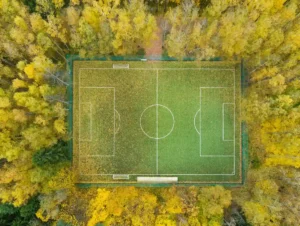
One of the main applications of cork is in synthetic turf sports fields, where it is used as a infill material to improve soil performance. Cork offers a combination of elasticity, stability and drainage that makes it ideal for sports such as soccer, rugby and field field hockey. In addition, its weather resistance ensures a long service life and reduces the need for maintenance, helping to reduce operating costs in the long run.
Playgrounds and public spaces
In addition to sports fields, cork is an excellent choice for playgrounds and public areas, where safety and sustainability are critical. Because of its ability to absorb impact, cork reduces the risk of injury, making it ideal for surfaces intended for children. In addition, its natural appearance blends seamlessly into urban and landscape settings, enhancing the overall aesthetics of public spaces.

Private gardens and terraces
Cork can also be used in private gardens and terraces to create draining and cushioning surfaces. This makes it an ideal choice for those seeking environmentally friendly solutions for their outdoor space. In addition, due to its resistance to moisture and weathering, cork maintains its properties over time, ensuring long life and minimal maintenance.
Sustainable construction
In the construction industry, cork is used to create lightened screeds, heat-insulating plasters and insulating mats. These applications help to improve the energy efficiency of buildings and reduce environmental impact. The versatility of cork makes it a valuable resource for architects and engineers engaged in sustainable building design.
Environmental benefits of cork for filling
Cork is an extraordinary material in many ways, but it is in its positive environmental impact that its greatest strength lies. Unlike synthetic materials, which contribute to global pollution, cork is a natural, renewable and fully biodegradable resource. Let’s look in detail at the main environmental benefits of cork for filling.
Reduction of microplastic pollution.
The use of cork for filling, as we have already mentioned, eliminates the risk of releasing microplastics into the environment. This is particularly relevant in sports fields, which have been identified as a major source of microplastics in Europe. By replacing synthetic materials with cork, pollution can be drastically reduced and fragile ecosystems protected.
Contribution to the circular economy
Cork is a perfect example of a circular economy. Cork oak bark can be harvested every 9-10 years without damaging the tree, which continues to grow and produce new bark. This cyclic process ensures a continuous supply of raw material without negative impacts on the environment.
CO2 uptake and biodiversity
Growing cork oaks helps mitigate climate change, as these trees absorb large amounts of CO2 during their life cycle. In addition, cork oak forests are crucial habitats for many animal and plant species, contributing to biodiversity conservation.
Durability and reuse
Cork is extremely durable and maintains its properties over time, reducing the need for frequent replacement. In addition, once its life cycle is over, the cork can be recycled or used for other applications, minimizing waste.
Cork and innovation: toward the future
The introduction of cork for filling is not only a response to today’s environmental challenges, but also represents an opportunity to innovate and improve how we manage and use natural resources. Because of its unique properties, cork is attracting the attention of researchers, entrepreneurs and institutions, who see this material as a key to building a more sustainable future.
Companies in the cork industry, such as Cork Line, are investing in cutting-edge technologies to improve production processes and expand cork applications. This includes creating new grain size blends, developing customized solutions for specific needs, and researching ways to make cork even better performing and more affordable.
In addition, the growing interest in sustainable solutions is driving collaborations between the private sector, public institutions and nongovernmental organizations. These partnerships are helping to promote the adoption of cork as a reference material for environmentally friendly and innovative projects, creating a synergy that benefits the environment, the economy, and society as a whole.