In recent years, the thermal and acoustic insulation market has seen an increasing focus on natural and environmentally sustainable materials. Among these, cork stands out for its unique properties, making it an ideal choice for those who wish to combine efficiency, aesthetics, and environmental friendliness. Cork, made from the bark of the cork oak tree, is a renewable, biodegradable and high-performance material that can compete with synthetic and often more environmentally invasive solutions.
The use of cork insulation is particularly suitable in green building projects and energy upgrades, where sustainability and living comfort are top priorities. Due to its unique cellular structure, cork provides optimal thermal insulation, reducing energy consumption, while offering excellent sound insulation, improving the quality of life in indoor environments. Increasing attention to these aspects is leading more and more architects, designers and construction companies to choose cork as the material of choice for innovative and responsible projects.
Cork and materials science: a technical approach
To fully understand the exceptional properties of cork, it is necessary to analyze its chemical and physical composition. Cork consists mainly of suberin, a waxy substance that forms a natural barrier against heat and noise. This composition, combined with its cellular structure, consisting of millions of tiny, beehive-shaped cells, gives cork unique characteristics in the landscape of insulation materials.
Each cork cell is filled with air-like gas, which occupies about 90 percent of the total volume of the material. This gives it an extraordinary ability to retain heat and absorb sound waves. Thermally, cork behaves as an excellent insulator because of its low thermal conductivity, which reduces heat loss in winter and heat gain in summer. On the acoustic front, cork acts as an effective vibration damper, absorbing unwanted noise and sound due to its ability to dissipate sound energy.
Comparative studies show that cork offers superior performance compared with many synthetic materials, such as polystyrene and mineral wool, especially in terms of durability and sustainability. Unlike these materials, cork retains its properties over time and does not degrade, making it an ideal choice for long-term applications. In addition, its resistance to weather and biological agents makes it suitable for both indoor and outdoor use.
| Feature | Cork | Synthetic Materials |
|---|---|---|
| Thermal conductivity (λ) | ≈ 0.043 W/mK | ≈ 0.030 W/mK (Polystyrene) |
| Breathability | High, reduces moisture problems | Low, can cause moisture accumulation |
| Durability | Unaffected by time | May degrade with time or under UV exposure |
| Sound insulation | Excellent | Moderate |
| Environmental impact | Environmentally friendly, biodegradable, recyclable | Non-biodegradable, high impact |
| Weathering resistance | High | Variable, often requiring additional treatments |
| Cost | Medium-high | Generally lower |
Types of cork for insulation
Due to its versatility, cork is available in different forms to meet specific thermal and acoustic insulation needs. Each type has unique characteristics that make it suitable for different application contexts.
Insulating cork panels
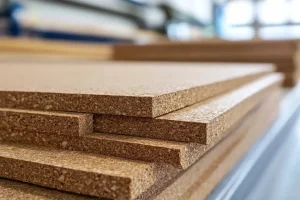
Cork panels are the most common solution for thermal and acoustic insulation of walls, ceilings and floors. Made by pressing cork granules under high temperatures, these cork panels offer excellent structural stability and uniform insulating capacity. They are ideal for exterior and interior insulation projects due to their weather resistance and ease of installation.
Cork granules
Cork granules, obtained by crushing bark, are an extremely versatile solution. They can be used to fill crawl spaces, attics and floating floors, creating a light and flexible insulation layer. Cork granules are particularly popular in renovation projects, where it is necessary to keep the overall weight of structures as low as possible.
Pressed cork
Pressed cork, often used in high-density panels, is designed for structural applications that require greater mechanical strength. These panels are ideal for floors and walls that must withstand heavy loads without compromising insulation performance.
Composite solutions
Recent innovations have led to the creation of composite materials that combine cork with other natural fibers or environmentally friendly materials. These products offer advanced properties, such as increased fire resistance or better insulation capabilities, making them perfect for sustainable building projects and modern design.
Applications of cork insulation in construction
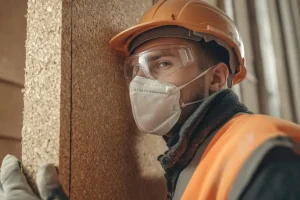 The use of cork as an insulation material is growing steadily in the construction industry due to its ability to meet the needs of energy efficiency and living comfort. Its applications are many and range from the construction of new buildings to the renovation of existing ones.
Walls and ceilings
Cork is widely used for thermal and acoustic insulation of walls and ceilings. In cork insulation systems, cork panels are applied to the outside or inside of walls to reduce heat loss and improve acoustic comfort. The breathability of cork also helps prevent moisture and condensation problems, improving the healthiness of indoor environments.
Roofs and attics
Because of its lightness and strength, cork is an ideal choice for roof and attic insulation. Cork granules can be used to create insulating layers between rafters, while pressed cork panels offer a stable and durable option for roofing and flat roofs.
Flooring
Cork is an excellent material for thermal and acoustic insulation of floors. Pressed cork panels are often used as an underlying layer to floating floors, reducing footfall noise and improving the thermal efficiency of rooms.
Green building and passive houses
In the context of green building, cork has established itself as one of the most sustainable and high-performance materials. Its natural properties, combined with its ability to reduce energy consumption, make it ideal for the construction of passive houses, designed to maximize energy efficiency and living comfort.
Cork insulation and living comfort
One of the most relevant aspects of using thermal and acoustic insulation cork is its direct impact on living comfort. Cork is not just a technical material: it is a solution that concretely improves the quality of life in indoor environments, thanks to its unique properties.
Thermal comfort throughout the year
Due to its low thermal conductivity, cork creates a natural barrier against extreme temperatures. In winter, it helps keep heat inside the building, reducing the need for heating. In summer, it prevents heat from penetrating, keeping rooms cool and comfortable. This results not only in improved comfort, but also in significant energy savings, lowering utility bills and reducing environmental impact.
Sound insulation for a quieter home
Cork is equally effective in reducing noise, both noise from outside and noise generated inside the building. Its cellular structure absorbs sound waves, damping vibration and reducing reverberation. This is particularly useful in noisy urban environments or multi-unit buildings, where noise control is critical to occupant well-being.
Reducing humidity and improving air quality
Another benefit of cork is its breathability. This natural material regulates humidity in rooms, preventing the formation of mold and condensation. In addition, cork does not release volatile chemicals, helping to keep indoor air clean and healthy. For those with allergies or asthma, living in an insulated space with cork can make a significant difference.
Cork as sound insulation in public and private spaces
 The effectiveness of cork as a sound insulator makes it an ideal choice not only for homes, but also for public and commercial spaces where noise control is a priority. From theaters to offices, cork proves to be a versatile material that improves acoustics without compromising aesthetics.
Acoustic designs for theaters and auditoriums
In spaces such as theaters and auditoriums, where acoustics are crucial, cork is used to line walls and ceilings. Cork panels not only absorb sound but also prevent reverberation, ensuring an optimal sound experience for the audience. In addition, because of its light weight, cork is easy to install, even in complex structures.
Modern office solutions
In open-plan offices, noise can become a serious problem, reducing productivity and increasing workers’ stress. Decorative cork acoustic panels are an elegant and effective solution for creating a quieter and more comfortable environment. In addition to improving acoustics, these panels can be customized with colors and textures, contributing to the overall design of the space.
Music rooms and recording studios
Recording studios and music rooms require the highest level of sound insulation. Cork, due to its ability to absorb vibration and sound, is often used to cover walls and floors, ensuring impeccable sound quality. In addition, the ease with which cork can be processed allows it to be adapted to spaces with specific needs, such as anechoic chambers or rehearsal rooms.
Cork and technological innovation
In recent years, thenatural insulation industry has seen considerable technological development, and cork has been at the center of many of these innovations. Thanks to research and collaboration between companies and scientific centers, cork is evolving to meet the needs of an increasingly demanding market.
Advanced cork processing technologies
Cork processing is no longer limited to traditional processes. Today, companies such as Cork Line use advanced machinery to improve efficiency and accuracy, reducing waste and optimizing the insulating properties of the material. For example, hot compression techniques make it possible to create panels with customized densities and strengths that are ideal for specific applications.
Cork-based composite materials
One particularly promising area is the development of composite materials that combine cork with other natural or recycled materials. These products offer advanced features, such as increased fire resistance or better insulation performance, making them ideal for complex projects in construction and design.
New applications in sustainable construction
Technological innovations are also opening up new avenues for the application of cork in construction. For example, cork is finding use in modular insulation systems, which facilitate installation and reduce construction time. These solutions are especially popular in prefabricated house projects and temporary structures.
Cork insulation: a choice for the future
Cork represents much more than an insulation material. It is a statement of intent toward sustainable building and design, where quality of life and respect for the environment are priorities. With the growing interest in green building and natural solutions, cork is set to become a key pillar in the landscape of insulation materials.
Prospects for market growth
The market for cork insulation is constantly expanding, driven by demand for sustainable materials and evolving energy regulations. In the coming years, investment in research and development is expected to increase significantly, leading to new applications and improved performance of cork.
Expected innovations
Future innovations in the cork industry include the use of digital technologies, such as 3D printing, to create customized insulation components. In addition, environmentally friendly treatments are being developed to further improve the material’s strength and durability, broadening its possibilities for use.
Tips for designers
For those working in construction and design, integrating cork into their projects means choosing a material that combines aesthetics, functionality, and sustainability. Whether wall panels, cavity granules or acoustic cladding, cork offers a versatile and high-quality solution for improving spaces and their environmental impact.
With its ability to combine tradition and innovation, thermal and acoustic insulation cork is confirmed as a valuable resource for a more sustainable future. It is not just a technical choice, but a concrete commitment to living well and protecting our planet. Contact us now to drive innovation forward!