The design world is constantly evolving, driven by the need to find innovative solutions that meet contemporary environmental challenges. Cork granules are emerging as a valuable resource, offering a unique balance of contemporary aesthetics, functionality and sustainability. This natural material, derived from cork processing, lends itself to a wide range of applications, opening up new possibilities for eco-friendly furniture and organic design.
Unlike many traditional materials, cork offers extraordinary versatility. Its granules, obtained by crushing bark, can be shaped, pressed or combined with other materials to create surfaces, structures and furnishings with a unique visual impact. In addition, their sustainable workmanship makes them an ideal choice for designers and architects seeking to combine creativity and environmental friendliness.
Cork granules and aesthetic revolution in design
The introduction of cork granules into design has revolutionized the aesthetics of modern spaces, offering new possibilities for creating surfaces and objects that combine functionality and originality. This material allows for textures and patterns that not only enrich the visual appearance, but also add a tactile dimension to environments. The granules can be processed to create soft, uniform surfaces or left raw for a more natural, organic effect.
A significant example is the use of cork granules to make artistic or decorative panels, in which the arrangement of the granules creates three-dimensional patterns that play with light and shadow. These panels not only decorate spaces but also transform them, introducing a natural element that captures attention and stimulates the senses.
In addition, the ability to dye or treat the granules further expands the aesthetic options. Designers around the world are experimenting with cork to create unique visual effects, combining it with natural pigments or environmentally friendly resins to create custom, one-of-a-kind furniture pieces. This versatility makes it an ideal choice for interior design projects that focus on a contemporary and sustainable style.
New applications: modular and modular furniture
One of the most interesting innovations in the use of cork granules for ecological design concerns the creation of modular and modular furniture. Thanks to the material’s light weight and flexibility, it is possible to design furniture that can be easily disassembled, reassembled or transformed, adapting to the ever-changing needs of living and working spaces.
Modular furniture made from cork granules offers many advantages. On the one hand, they make it possible to optimize space, allowing furniture to change function or arrangement as needed. On the other hand, their sustainable design integrates well with circular economy principles, as components can be reused or recycled at the end of their life cycle.
A practical example is modular shelving and seating systems, in which cork granules are pressed to create lightweight yet strong elements. Not only are these pieces of furniture easy to assemble and disassemble, but they can be customized with different colors and textures, offering an aesthetic and functional solution for dynamic spaces such as coworking, showrooms, and urban housing.
Synergy between aesthetics and functionality
Cork granules do not just meet aesthetic needs; they also offer functional benefits that make them a valuable resource in design. Because of their natural properties, such as thermal and acoustic insulation, cork granules can be integrated into furniture solutions that improve the comfort and quality of rooms.
For example, using cork granule panels to cover walls and ceilings not only adds a natural and sophisticated touch, but also helps reduce noise, creating quieter and more relaxing spaces. This feature is especially appreciated in open-plan offices, restaurants, and modern homes, where acoustics are often a challenge.
Another interesting application involves the design of furniture that incorporates natural lighting. Designers are experimenting with pressed cork granules to create lamps and cork panels that diffuse warm, enveloping light, transforming the atmosphere of interior spaces. These solutions not only enhance the aesthetics of environments, but also promote the psychophysical well-being of users, making cork a key material for biophilic design.
Finally, cork’s resistance to weathering makes it ideal for outdoor furniture projects where aesthetics and functionality must coexist. Seating, tables and flooring made from treated cork granules offer an environmentally friendly and durable alternative to synthetic materials, helping to create environmentally friendly outdoor spaces without sacrificing comfort and beauty.
Environmental benefits and impact on sustainable design
One of the main reasons why cork granules are gaining popularity in ecological design is their positive impact on the environment. This material, derived from an all-natural manufacturing process, is distinguished by being renewable, biodegradable and recyclable, making it one of the most sustainable choices available to designers and architects today.
Reducing the carbon footprint
The production of cork granules generates a significantly lower carbon footprint than synthetic materials. Cork, harvested without damaging trees, actively contributes to the absorption of CO₂ from the atmosphere, mitigating the effects of climate change. By using cork granules in furniture projects, companies and designers can communicate a clear commitment to sustainability, responding to the growing demands of conscious consumers.
Waste valorization
Another crucial aspect of cork is its ability to integrate into circular economy models. The waste generated during cork processing is turned into granules, which can be used in creative applications in design. This practice reduces waste and ensures that every part of the bark is used efficiently, maximizing the value of the material.
Experiential design: cork at the center of spaces
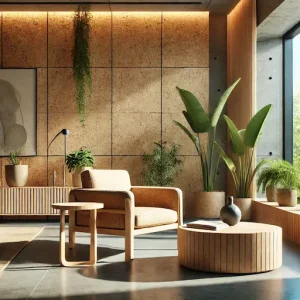 Cork granules are not only functional and environmentally friendly, but also offer a unique opportunity to create multisensory environments that engage sight, touch, and even hearing. The natural texture of cork, combined with its insulating properties, makes it possible to design spaces that improve people’s well-being, meeting the need for comfort and serenity.
Immersive and biophilic spaces
The biophilic design concept, which is based on the integration of natural elements into built environments, finds cork granules an ideal material. Decorative cork panels, flooring and wall tiles can be used to create spaces that evoke a direct connection with nature. This type of design is particularly suitable for offices, lounges and relaxation areas, where it is important to reduce stress and improve productivity.
Tactile and visual experiences
With its soft texture and warm color, cork invites contact and adds a tactile dimension to spaces. Experienced designers are harnessing these characteristics to create art installations that stimulate the senses and transform environments into unique experiences. In addition, pressed cork granules can be combined with lighting techniques to achieve visual effects that further enhance spaces.
Collaborations between designers and artisans
One of the strengths of using cork granules in design is the ability to collaborate with craftsmen and specialized companies, combining traditional techniques and technological innovation. These partnerships allow the development of creative solutions that enhance the unique properties of cork and meet the specific needs of design projects.
High-quality, customized designs
Thanks to the workability of cork granules, fully customized projects can be created, adapting shapes, colors and textures to customer requirements. For example, some designers collaborate with artisans to create custom-made wall coverings, decorative acoustic panels, or unique furnishings. These solutions not only offer high aesthetic value, but also stand out for their attention to detail and quality.
Case study: collections inspired by nature
A number of design collections, developed in collaboration with artisans and cork producers, have demonstrated the creative potential of the material. For example, projects using cork granules combined with recycled wood, glass or metals show how a balance between innovation and sustainability can be achieved. These examples highlight the role of cork as a versatile material suitable for a wide range of styles and applications.
Innovations in organic design thanks to cork granules
As processing technologies advance, cork granules are becoming increasingly prominent in contemporary design, pushing the boundaries of creativity and sustainability.
3D solutions and custom design
The use of advanced technologies, such as 3D printing, is opening up new possibilities for designers. Cork granules can be combined with environmentally friendly resins to create three-dimensional objects, such as lamps, vases or decorative structures. This approach makes it possible to create unique pieces that are perfectly suited to the aesthetic and functional needs of projects.
Integration with other environmentally friendly materials
Another interesting innovation is the integration of cork granules with other sustainable materials, such as bamboo, hemp, or natural fibers. These combinations create visual and tactile contrasts that enrich the design, offering solutions that are both ecological and sophisticated.
The future of cork in design
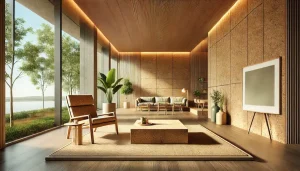 The role of cork in ecological design is set to grow, fueled by increasing environmental awareness and the search for materials that combine innovation and sustainability. Cork granules, in particular, are a central element of this transformation because of their versatility and unique properties.
Growth prospects in organic furniture
As the concept of eco-friendly furniture continues to evolve, cork is gaining ground as one of the most popular materials. Companies are investing in research and development to explore new applications, such as freestanding panels, modular furniture, and lightweight architectural structures. This momentum promises to make cork a key element in future design projects.
Expected innovations
Among the most promising innovations is the use of parametric design and digital technologies to create complex and optimized shapes. In addition, the development of new environmentally friendly treatments for cork could further improve its durability and aesthetics, expanding its potential uses.
Cork granules toward a new design
Cork granules for eco-friendly design are transforming the way we conceive of furniture and interior design, not only as a response to growing environmental concerns, but also as a symbol of a cultural evolution toward sustainability. This material, derived from a natural process and completely renewable, represents a meeting point between tradition and innovation, combining practicality, beauty and respect for the planet.
Adopting cork granules means rethinking design critically, addressing global challenges such as climate change and environmental degradation with concrete and innovative solutions. It is not just about making more sustainable furniture or upholstery, but about proposing a different way of inhabiting spaces that is more in tune with the environment and people’s well-being. The ability to use cork granules in combination with advanced technologies, such as 3D printing or parametric design, also opens up exciting horizons for custom projects and artistic experimentation, helping to redefine contemporary aesthetics.
However, this revolution is not without its challenges. The industry must address the need to integrate greater environmental awareness throughout the production chain, ensuring that the entire life cycle of cork respects circular economy principles. In addition, the design market must educate consumers about the added value of sustainable materials, overcoming the idea that sustainability is a cost rather than an investment in the future.
Cork granules are not just a material: they represent a systemic approach that redefines the role of design in society. In a world that demands responsible and innovative solutions, cork stands as a valuable ally in building a design vision that not only meets aesthetic and functional needs, but also reflects an ethical commitment to our planet and future generations. This critical and conscious approach makes cork not only a choice for the present, but an investment for a better future.